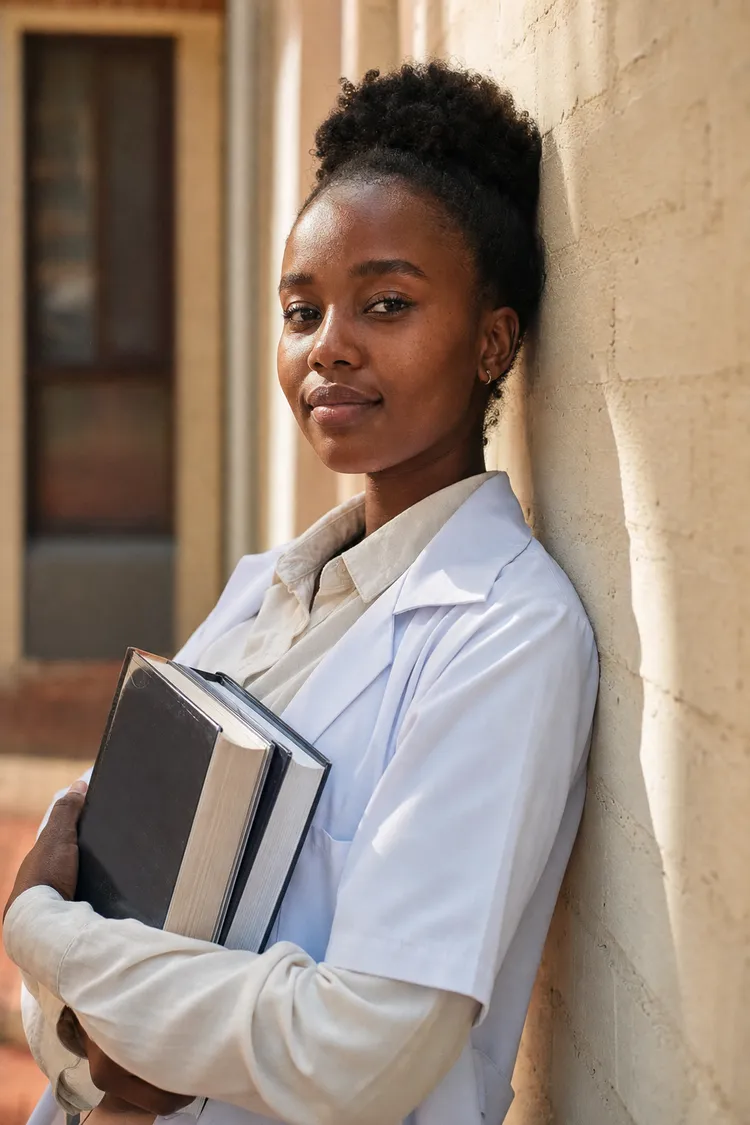
I came to Karoo because I wanted to learn medicine where it mattered. Two years in, the ward rounds have changed how I think about every patient I will ever see.
Zinhle Dlamini
Fourth-year MBChB · Eastern Cape
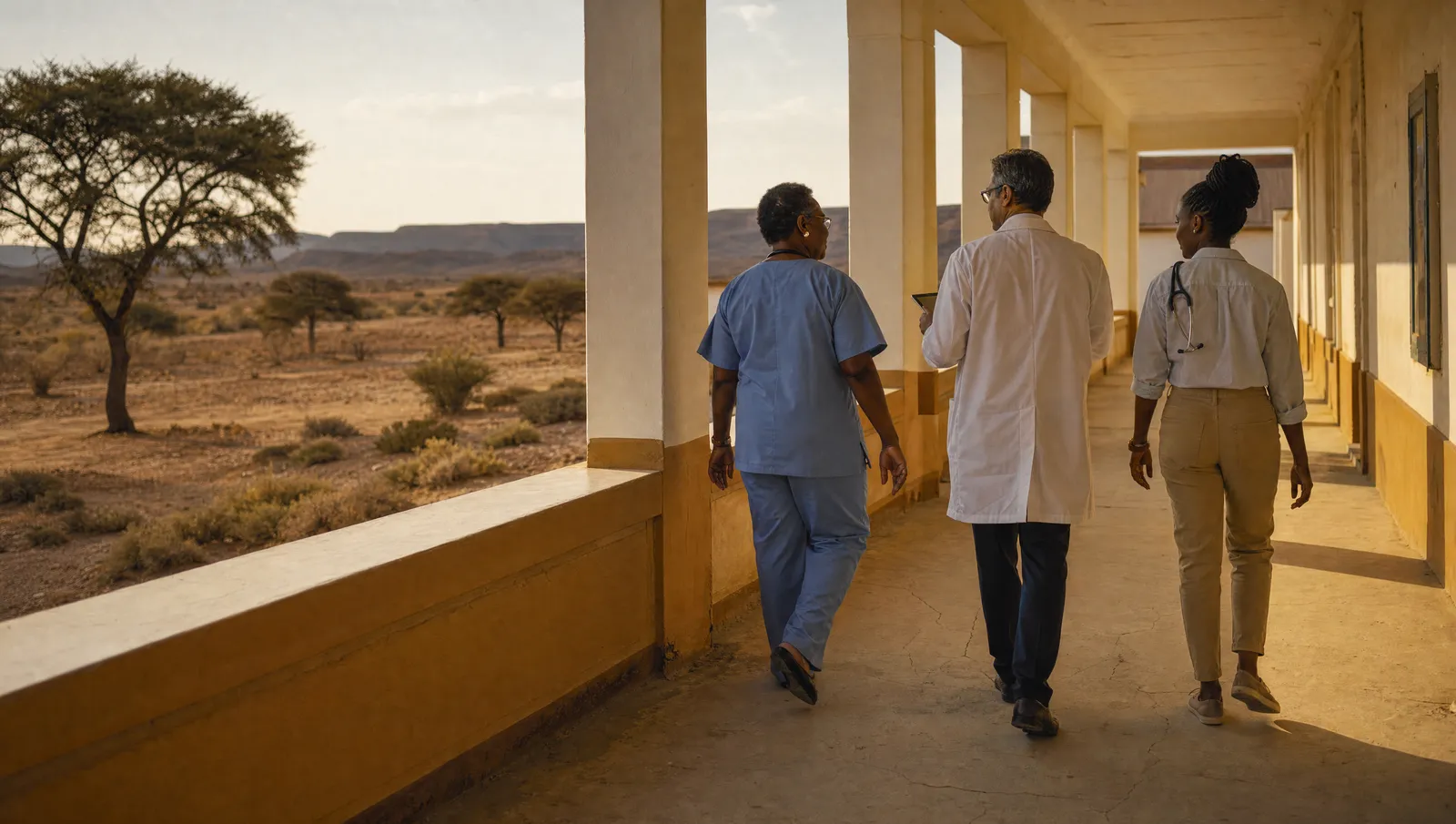
A medical school, teaching hospital and research community rooted in the South African Karoo — serving the people of our region, asking the questions our country needs answered, and training the next generation of clinicians, scientists and health workers.
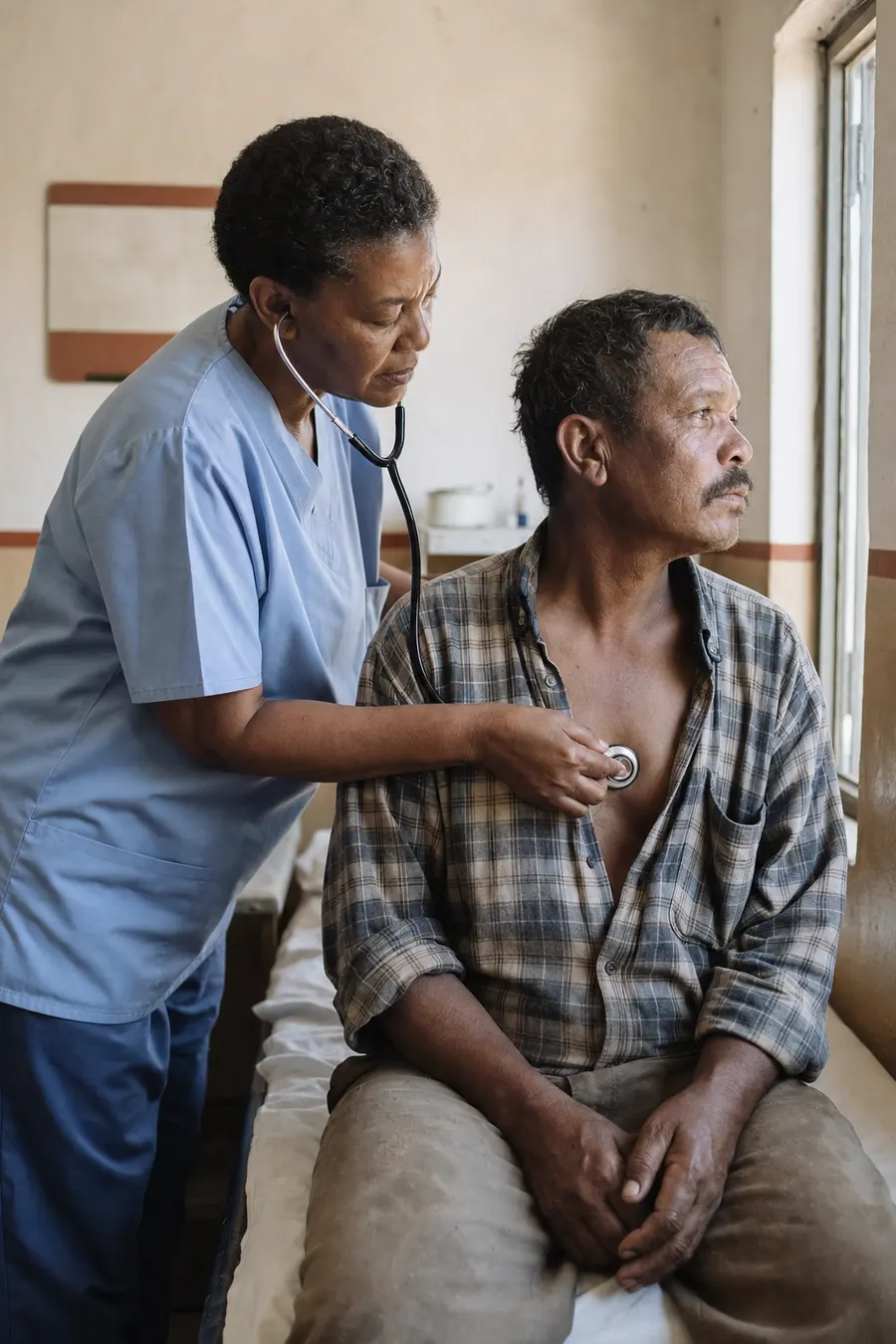
Eleven clinical departments serving 184,000 patient consultations a year across the Central Karoo, with signature programmes in rural emergency medicine, cardiothoracic surgery, infectious diseases and maternal health.
Explore care at Tswelopele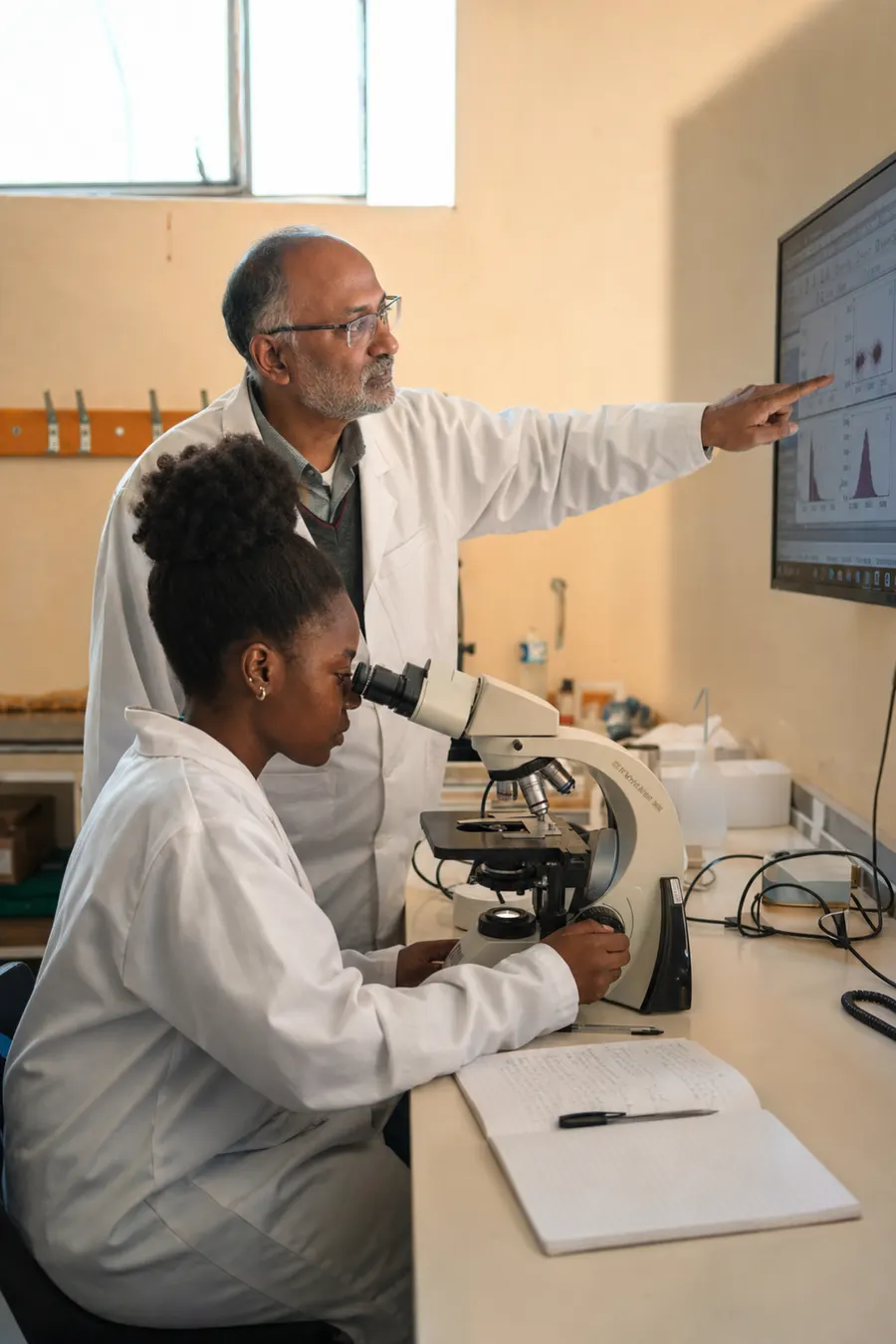
Fourteen research centres organised under four cross-cutting themes: communicable disease, cardiovascular and metabolic health, public health and health systems, and translational genomics.
Explore our research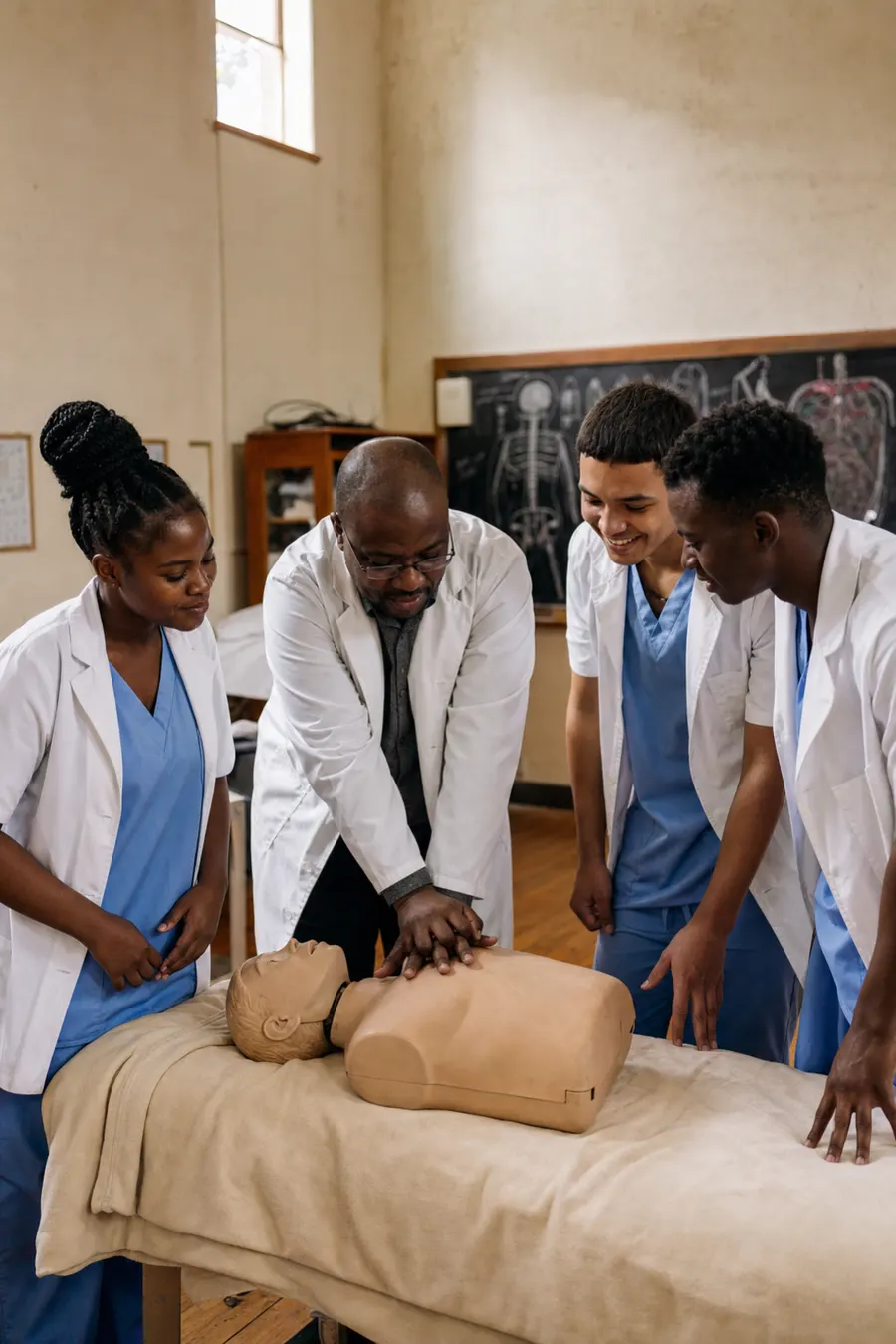
The Karoo MBChB and its postgraduate pathway shape doctors, scientists and allied health workers ready to serve South Africa — rural-first, evidence-led, and built on the work of the wards next door.
Explore programmesThree missions, woven into one institution. Each makes the other two truer.
The Karoo Faculty of Health Sciences was founded in 1971 to serve a region the rest of South Africa’s medical schools could not reach. Half a century later, the work is still the same shape, even if the questions have grown harder. We treat patients in the wards of Tswelopele Teaching Hospital and across eleven outreach clinics that thread the Central Karoo together. We discover how the diseases of our region actually behave, by studying them where they happen, on the people who carry them. And we train doctors and scientists who choose to stay.
Our students learn paediatrics on a ward that ran a measles surge two years ago. They learn TB management on a corridor that has seen six drug-resistant lineages emerge and fall. They learn what dignity costs and what evidence is worth. When they graduate, most of them go on to serve in district hospitals across Limpopo, the Eastern Cape, the Northern Cape and the Free State — the parts of the country the system most easily forgets.
This is not a research-first institution that treats patients on the side, nor a hospital that does some teaching. It is the three missions, balanced on purpose, every year — and the design of every part of the campus, from the lecture theatres above the wards to the journal club inside the ICU, exists to make that balance hold.
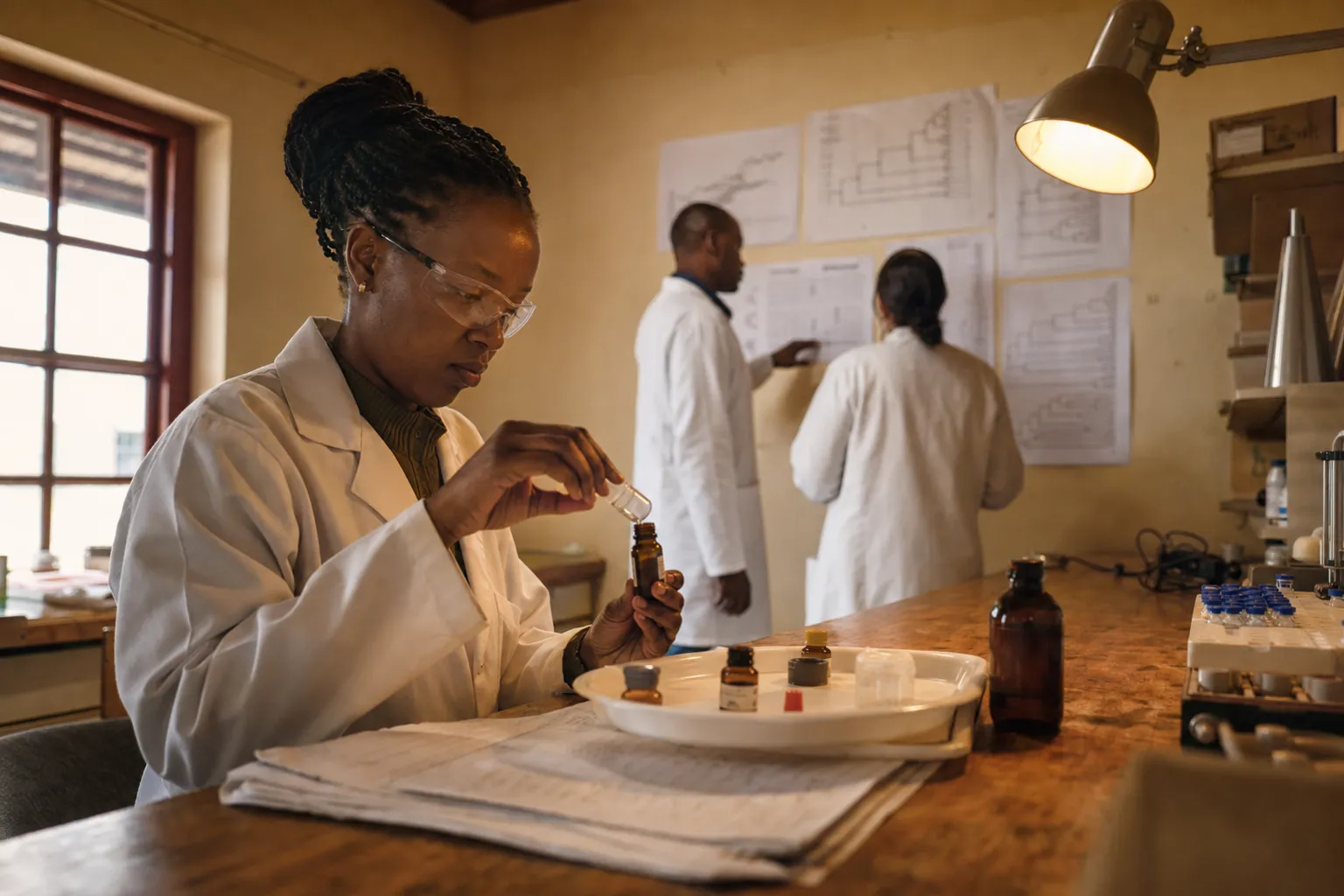
Over the past three years, the Karoo Institute for Translational Genomics has reconstructed the transmission tree of a previously uncharacterised Mycobacterium tuberculosis lineage moving along the seasonal farming corridor between the Karoo and the Boland. The work, led by Professor Anika Naidoo and Dr Vusi Khumalo with a clinical team from the Tswelopele TB Unit, is now informing Western Cape’s revised contact-tracing protocols.
We did not set out to write a paper. We set out to understand why three of our patients kept being reinfected by something that looked like the same strain. The genome told us the rest.Read the full discovery
Karoo trains for a long career, not a short one. Here are three of the people walking that arc right now.
I came to Karoo because I wanted to learn medicine where it mattered. Two years in, the ward rounds have changed how I think about every patient I will ever see.
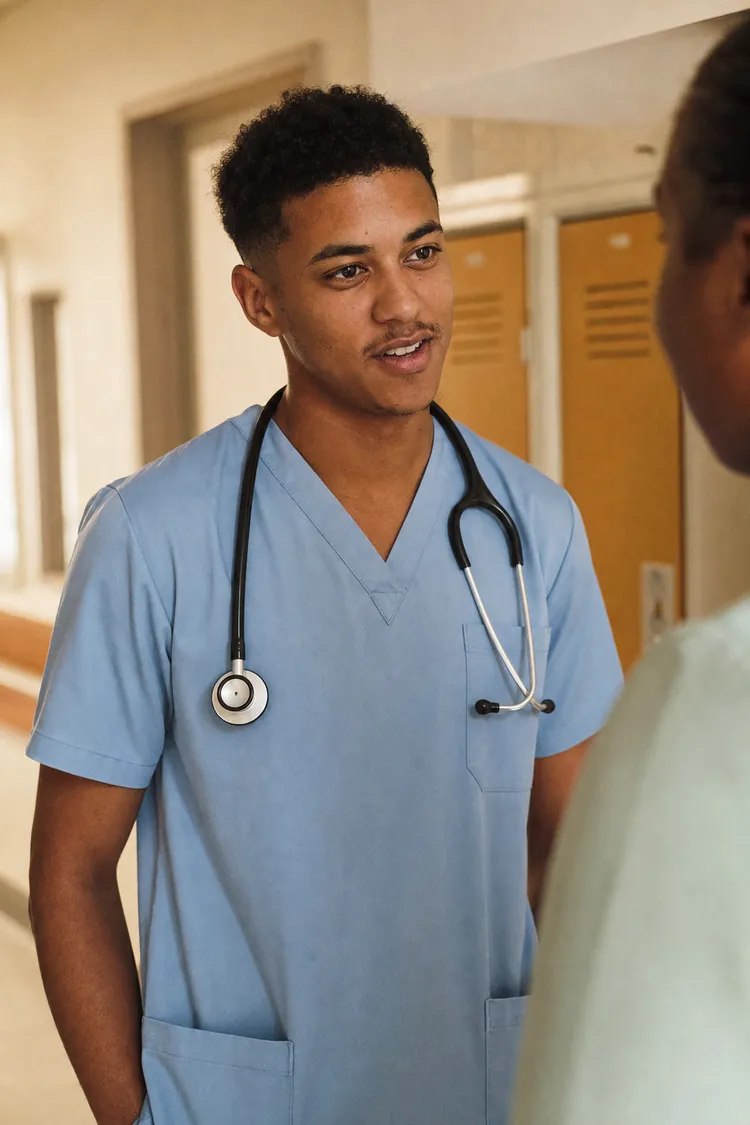
My uncle is a GP in Beaufort West. I grew up watching what rural medicine actually looks like. Karoo was the only school that took that as a strength and not a thing to fix.
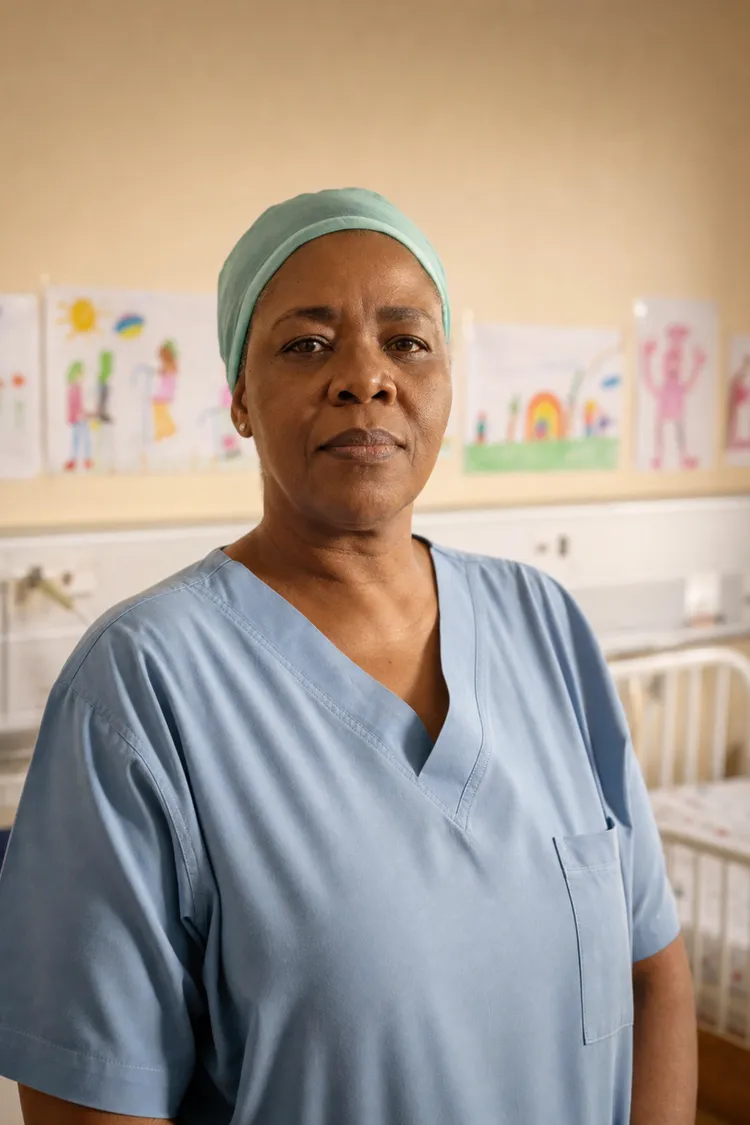
I am a surgeon because Karoo trusted me with hard cases as a registrar. Eighteen years later, every operating list I run still feels like an extension of what I learned here.